
"Venezuelan coffee farms"
200 article(s) found
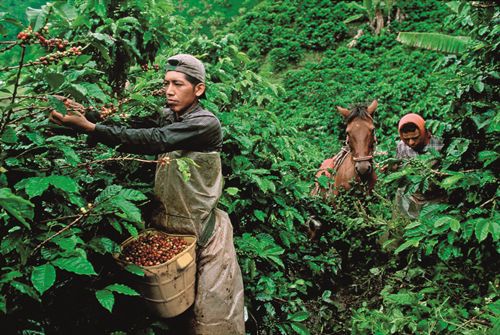
Colombia, the land saved by coffee
Coffee plantations in the mountains of Colombia. My coffee trip to Colombia began three years ago when Venezuela moved to Bogota, the capital of Colombia. When I was in Venezuela, I often heard people say that before Venezuela discovered oil, coffee was much more famous than Colombian coffee. However, Colombians say that this is just wishful thinking of Venezuelan nostalgia after all.

Flavor and taste characteristics of Colombian coffee producing area introduction of boutique coffee beans in Hope Manor
After the news of Napoleon I's invasion of Spain in 1808 spread to Colombia, the people of that place immediately launched an independence movement. On July 20, 1810, a large-scale uprising against Spanish colonial rule broke out in Bogota and the Governor of New Granada was arrested. In November 1811, representatives from all over the world organized Congress in Bogota and established the New Granada Joint Provincial Government, which was announced on November 11.

Uganda Coffee with Low Acidity Flavor Description Variety Characteristics Fine Coffee Bean Taste Introduction
Coffee cultivation in Uganda is entirely family-based and small-scale. The livelihoods of 25 per cent of the population are linked to coffee production. There are about 500000 farms growing coffee, but mainly producing roberts. Robster accounts for 90% of coffee production, with the rest becoming Arabica coffee. Arabica and Hobbs are harvested from October to February. Uganda coffee

Introduction to the description and treatment of aromatic Burundian Coffee Flavor
There are two major ethnic groups in Burundi, and only about 15% of the Tutsi have ruled the country since the 16th century, controlling the civilian population, which is mainly made up of Hutu, plus a very rare aboriginal Twa. This abnormal social structure in which ethnic minorities occupy a high position has buried the evil of the instability of the country.

An introduction to the coffee flavor and taste of Lazmus Manor in Colombia with moderate acidity and good balance.
About 1000 BC, there was a hunter-gatherer society near Bogota today. Around 1000 AD, the American Indians created a political system. It is a pyramid-shaped structure with the top of the tower as the leader. In today's Colombia, two civilizations have adopted this complex system. One is Tayronas in the Caribbean region, and the other is Bogota

Introduction to the characteristics of the manor producing area with unique flavor of Colombian coffee
After the news of Napoleon I's invasion of Spain in 1808 spread to Colombia, the people of that place immediately launched an independence movement. On July 20, 1810, a large-scale uprising against Spanish colonial rule broke out in Bogota and the Governor of New Granada was arrested. In November 1811, representatives from all over the world organized Congress in Bogota and established the New Granada Joint Provincial Government, which was announced on November 11.

Columbia Coffee producers Association-- introduction to the quality characteristics of Flavor description treatment
Colombian Coffee Bean in 1824, the Colombian and Peruvian coalition forces defeated the Spanish colonial army, and Peru gained independence. During the war with Bolivar's army in Peru, Santander took over as president and presided over the affairs of Colombia. Santander advocated the establishment of a federal regime and United local forces against Bolivar's political proposition of unity and unity. Within the Colombian Congress and government

Introduction to the varieties of fine coffee beans in the manor of Uganda coffee producing area with delicate taste
The cultivation of Ganda Coffee in China Coffee Network is all small-scale family operation. The livelihood of 25% of the population is closely related to coffee production. About 500000 farms grow coffee, but mainly Robster. Robusta accounts for 90% of coffee production, and the remaining 1 is Arabica coffee. Arabica and Robusta collect from October to February of the following year.

A brief introduction to the market price of fresh-flavored Ugandan boutique coffee beans
The cultivation of coffee in Uganda is all small-scale family operation. The livelihood of 25% of the population is closely related to coffee production. About 500000 farms grow coffee, but mainly Robster. Robusta accounts for 90% of coffee production, and the remaining 1 is Arabica coffee. Arabica and Robusta are harvested from October to February. Ugandan coffee

Rich flavor of Colombian coffee taste introduction to the characteristics of fine coffee in the manor area
In 1501, the Spaniard R.de Bastidas first reached the northern coast of Colombia and founded the city of Santa Marta in 1525. In 1533, P.de Eredia established Cartagena. In 1535, G. Simone de Xada led the Spanish colonial army into the interior of Colombia, conquered the Chibucha, established the city of Bogota, and Colombia became a Spanish colony. At the beginning

A brief introduction to the Origin, Development, History and Culture of Fine Coffee beans in Santa Rita Manor, Colombia
In order to better promote Colombian coffee, the Colombian Coffee Growers Association (FNC) launched a live-action version of Juan based on this image. Waldez. Now the uncle is the third-generation real-life version. Juan on behalf of Colombian coffee farmers? Uncle Valdez, as the ambassador of Colombian Coffee, will travel around the world to promote Colombian Coffee.

Fresh Taste Uganda Coffee Flavor Description Features Origin Grind Fine Coffee Taste Introduction
Later, when ships replaced sailboats, people drank fresher coffee beans because of shorter delivery times. But people accustomed to old beans are not used to this fresh taste, so they desperately pursue old Java coffee, so that the Indonesian government and some businessmen deliberately store fresh beans in warehouses for one to two years before selling them to consumers. In fact, aged Java beans are more common than fresh beans.

A brief introduction to the cultivation of high-quality and pollution-free boutique coffee beans in Uganda, geographical location, climate and altitude
The cultivation of coffee in Uganda is all small-scale family operation. The livelihood of 25% of the population is closely related to coffee production. About 500000 farms grow coffee, but mainly Robster. Robusta accounts for 90% of coffee production, and the remaining 1 is Arabica coffee. Arabica and Robusta are harvested from October to February. Ugandan coffee

Uganda Coffee Grind Processing Flavor Description Region Features Taste Manor Introduction
Ugandan coffee beans have a unique flavor and fragrance, which is very suitable for making Italian and other flavors of coffee. More importantly, Ugandan coffee beans are strictly screened according to international market standards to ensure their high quality and pollution-free characteristics. Africa is home to Arabica and Robusta, two major coffee varieties, while East Africa enjoys a plateau of water and the pearl of East Africa.

Boutique Coffee introduction to 53 Coffee producing areas in the World 3
thirteen. The coffee grown in the highlands of Panama is absolutely high quality, but the plantation coffee is not yet on the market. Panama coffee is smooth, light and sour, and its high-quality coffee beans are pure and distinctive. The first batch of coffee exported each year is shipped in November, and almost all high-quality coffee beans are shipped to France and Finland. The best coffee is grown in the north of the country, that is,

A brief introduction to the flavor, taste and aroma characteristics of fresh Ugandan boutique coffee beans
This coffee is produced in the Mount Elgonne region of Uganda. Balanced acidity and rich oil between 1600 and 1900 meters above sea level are the characteristics of this coffee. It tastes mild and simple, with a papaya flavor. Dry aroma (1-5): 3.2 wet aroma (1-5): 3.4 acidity (brightness) (1-10): 8 taste (hierarchy) (1-10): 8.5 taste (alcohol thickness)

A brief introduction to the Market Price of Ugandan Fine Coffee Bean varieties with unique charm
Uganda Organic Bugisu producing country: Uganda Grade: HB growing area: Elgon, Mbalai Brand: organic Bugisu treatment method: wet treatment appearance: 1.8dBash 300grgrgrere 16-18SCR Variety: unknown later when steamships replaced sailboats, people drank relatively fresh coffee beans due to shorter shipping time. But people who are used to drinking Chen Dou are not used to it.

A brief introduction to the Market Price of Ugandan Fine Coffee Bean varieties with fragrant taste
Uganda Organic Bugisu producing country: Uganda Grade: HB growing area: Elgon, Mbalai Brand: organic Bugisu treatment method: wet treatment appearance: 1.8dBash 300grgrgrere 16-18SCR Variety: unknown later when steamships replaced sailboats, people drank relatively fresh coffee beans due to shorter shipping time. But people who are used to drinking Chen Dou are not used to it.

A brief introduction to the flavor, taste and aroma characteristics of plain and mild Ugandan boutique coffee beans
This coffee is produced in the Mount Elgonne region of Uganda. Balanced acidity and rich oil between 1600 and 1900 meters above sea level are the characteristics of this coffee. It tastes mild and simple, with a papaya flavor. Dry aroma (1-5): 3.2 wet aroma (1-5): 3.4 acidity (brightness) (1-10): 8 taste (hierarchy) (1-10): 8.5 taste (alcohol thickness)
A brief introduction to the History and Culture of the Origin and Development of Ugandan Fine Coffee beans
Uganda Organic Bugisu producing country: Uganda Grade: HB growing area: Elgon, Mbalai Brand: organic Bugisu treatment method: wet treatment appearance: 1.8dBash 300grgrgrere 16-18SCR Variety: unknown later when steamships replaced sailboats, people drank relatively fresh coffee beans due to shorter shipping time. But people who are used to drinking Chen Dou are not used to it.